

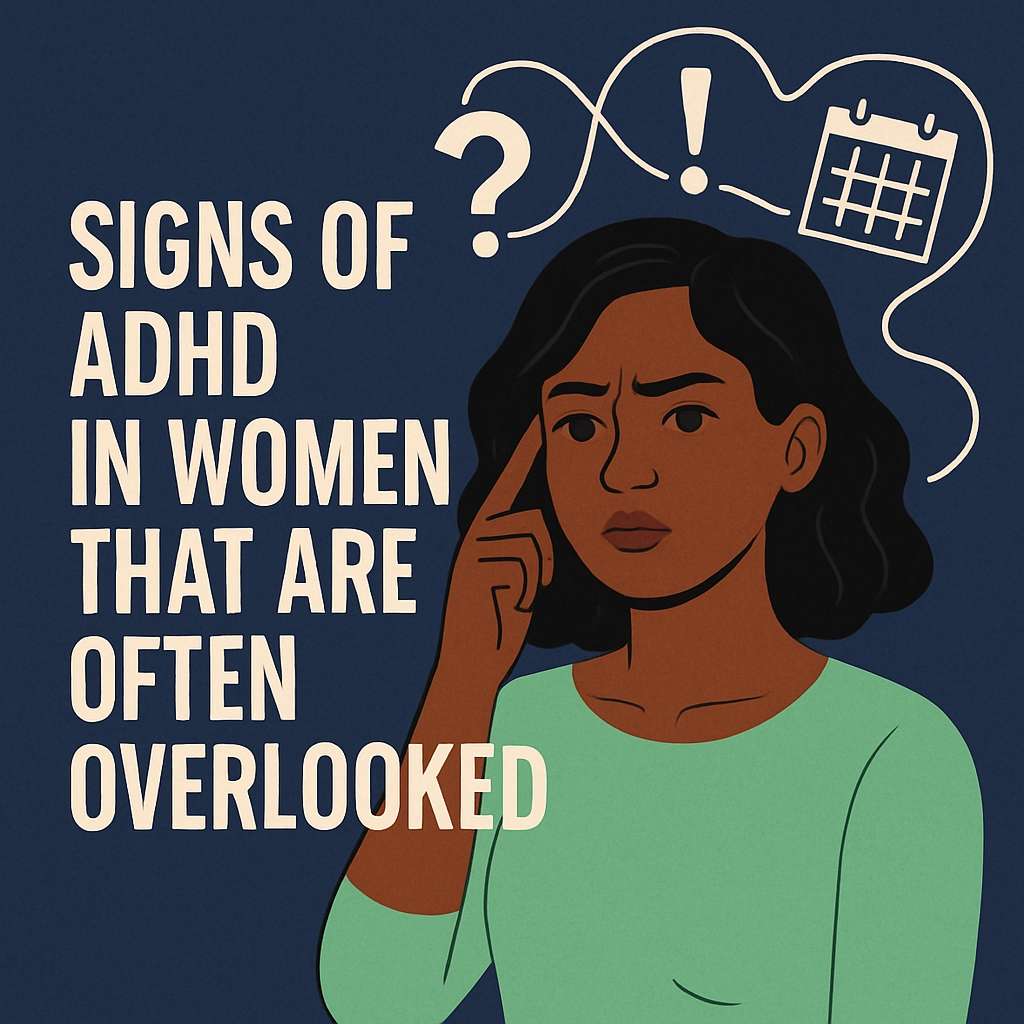
Introduction: A Sharp Rise – and a Recognition Gap
If it feels as though every second podcast host or colleague is suddenly talking about an ADHD diagnosis, you’re not imagining it. Between **2020 and 2022, new ADHD diagnoses in U.S. women aged 23-49 **doubled (Charlie Health), mirroring a broader climb that has pushed the overall adult prevalence from 6.1 percent two decades ago to more than 10 percent today (University of Utah Healthcare).
Yet despite these numbers, clinicians still miss ADHD in women far more often than in men. Girls tend to present as day-dreamy rather than disruptive, and the same quieter “inattentive” profile often persists into adulthood (PMC). Social conditioning teaches many women to mask anything that feels “too much,” so symptoms are re-framed as anxiety, depression, or perfectionism instead (Pharmacy Times, ADDitude). The result? Countless women struggle for decades before anyone joins the dots.
The first step toward closing that gap is knowing what to look for—especially the subtler signs that rarely make it into checklists created for boys. Below are seven of the most commonly overlooked indicators of ADHD in adult women, followed by practical strategies for moving forward.
1. Anxious-Looking “Internal Hyperactivity”
By their twenties and thirties, many women no longer bounce off the walls; the hyperactivity goes underground as a racing mind, constant fidgeting, or the inability to relax on the couch without also answering emails. Research calls it “internal restlessness,” and women consistently rate it as more distressing than classic distractibility (ADDitude, PMC). Because it manifests as tension, it’s easy to mistake for generalized anxiety, leading to years of treatment that never fully hits the mark.
2. Time Blindness & Chronic Lateness
If you’re always “five minutes away” when Google Maps swears it’s twenty, you may be experiencing time-blindness—an executive-function glitch that makes it hard to gauge the passage of minutes or hours. Clinicians now flag time-blindness as a secondary but highly disruptive ADHD symptom (ADD.org, New York Post). Women often internalize the fallout as personal failure (“I’m just disorganized”) rather than realizing it’s neurobiological.
3. Hyperfocus That Looks Like Productivity—Until It Doesn’t
Ironically, the same brain that can’t start the laundry may spend eight straight hours perfecting a slide deck. Hyperfocus feels like a superpower, but it can wreck sleep schedules, relationships, and self-care when it blindsides you (Health). Because society rewards productivity, this symptom often flies under the radar.
4. Rejection-Sensitive Dysphoria (RSD)
Many women describe an almost physical pain after mild criticism—followed by hours of rumination or people-pleasing. This extreme emotional response, called rejection-sensitive dysphoria, is reported more often by women than men with ADHD (ADDitude). RSD isn’t in the official diagnostic criteria, so therapists may chalk it up to low self-esteem unless they know the ADHD connection.
5. Sensory Overload & Environmental Intolerance
Bright lights, background chatter, a scratchy sweater—the world can feel loud. Up to 60 percent of adults with ADHD show some form of sensory processing sensitivity, yet women are twice as likely to report it (ADDitude). Because sensory overload triggers emotional shutdown, many women are mislabeled as “moody” or “high-maintenance.”
6. Hormone-Driven Symptom Swings
Estrogen moderates dopamine, the very neurotransmitter ADHD medication targets. When estrogen dips—right before menstruation, during postpartum, or through perimenopause—inattention, mood swings, and brain fog spike (ADDitude, Healthline). Cyclical crashes often convince women they’re “just hormonal,” delaying an ADHD evaluation.
7. Perfectionism & People-Pleasing Masking ADHD
Decades of trying to “do it right” can morph into relentless perfectionism: color-coded planners, triple-checked emails, or over-preparing for meetings. Experts note that this coping style helps women hide executive-function struggles—until the juggling act collapses (Columbia Mental Health). Burnout, not distraction, is what finally brings many to a clinician’s office.
Why ADHD Is Still Misunderstood in Women
- Diagnostic bias: Early research focused on hyperactive boys, so inattentive-type symptoms never made the spotlight (PMC).
- Social expectations: Girls are praised for compliance; they learn to mask, then crash privately (Pharmacy Times).
- Comorbid camouflage: Anxiety, depression, PMDD, and even perfectionism can dominate appointments, steering clinicians away from an ADHD screen (ADDitude).
Understanding these factors reframes the narrative from “I must be lazy” to “My brain is wired differently—and that’s manageable once it’s named.”
Management Tips & Next Steps
| Strategy | Why It Helps | First Action Step |
|---|---|---|
| Comprehensive Evaluation | Rules out look-alike conditions and tailors treatment. | Ask your primary-care provider for a referral to a psychiatrist or a psychologist experienced in adult ADHD. |
| Medication, if appropriate | Stimulants/non-stimulants boost dopamine and norepinephrine, improving focus and impulse control. Personalized plans outperform one-size-fits-all scripts (The Guardian). | Track side effects and benefits weekly to fine-tune dosage. |
| CBT & ADHD Coaching | Targets negative self-talk, builds executive-function skills, and creates accountability (ADD.org). | Schedule a consult with a certified ADHD coach or therapist who uses CBT techniques. |
| Mindfulness & Stress-Reduction Practices | Improves emotional regulation and attention span (HelpGuide). | Start with three 5-minute breathing breaks per day. |
| Lifestyle Levers | Sleep, nutrition (protein + omega-3s), and daily exercise stabilize dopamine, while digital timers and visual planners combat time-blindness (ADDitude, Verywell Health). | Choose one lever—e.g., 20-minute morning walk—and make it habit before adding another. |
| Hormone-Aware Planning | Tracking cycles identifies low-estrogen windows when extra support or medication tweaks help (Scientific American). | Use a period-tracking app and note symptom intensity daily for two months. |
| Sensory-Friendly Environments | Noise-canceling headphones, softer lighting, and clutter-free workspaces cut overwhelm (Neurodivergent Insights). | Audit your desk: remove visual clutter and add a small plant for calm focus. |
Where to Go from Here
You are not alone, broken, or lazy; you are part of a newly visible wave of neurodivergent women redefining productivity—and life satisfaction—on your own terms. The moment you recognize these signs, you gain the power to seek targeted help, design environments that serve you, and let go of decades-old self-criticism.
Ready for Deeper Guidance?
Download our “ADHD in Adult Women” guide for a step-by-step roadmap: self-assessment tools, hormone-tracking templates, productivity hacks that actually work for ADHD brains, and motivational worksheets to keep you moving forward.

ADHD in Adult Women
ADHD in Adult Women: Understanding and Managing ADHD in Women
ADHD in women often goes undiagnosed, leading to years of misunderstanding and frustration. “ADHD in Adult Women” is an insightful guide that sheds light on how ADHD manifests differently in women and provides practical strategies for managing its unique challenges. This comprehensive ebook is a must-read for any woman dealing with ADHD or anyone wanting to understand and support a loved one better.
👉 [Click here to learn more and get the ebook]
Your brain was never the problem—not knowing how it works was. Let’s change that, together.
-

-

Finding Your Purpose and Passion
Original price was: $9.99.$7.00Current price is: $7.00. -

Creating A Brand For Your Business
Original price was: $16.99.$12.00Current price is: $12.00.