

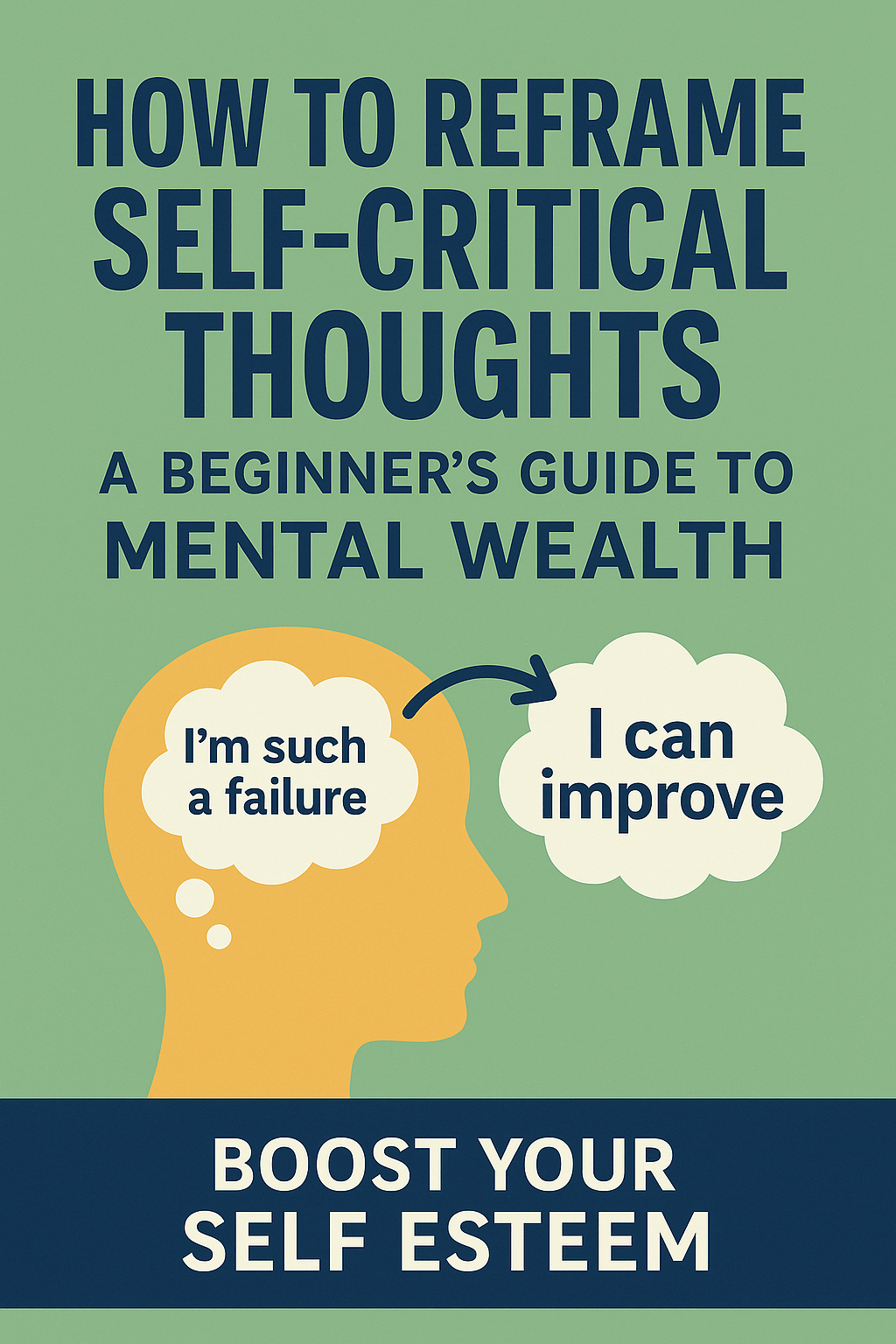
How to Reframe Self-Critical Thoughts: A Beginner’s Guide to Mental Wealth
Have you ever caught yourself thinking, “I’m not good enough,” or “Why can’t I ever get things right?” If so, you’re not alone. These self-critical thoughts are more common than you might think—and more harmful than you realize. For millennials navigating a world of constant comparison, economic uncertainty, and high expectations, self-criticism can become a silent saboteur of mental and emotional wealth.
But here’s the good news: these thoughts can be reframed. You don’t have to stay trapped in a loop of self-doubt and negativity. By learning how to reframe self-critical thinking, you can unlock greater confidence, resilience, and ultimately, mental wealth.
In this post, we’ll explore what self-critical thoughts are, where they come from, why they matter, and three beginner-friendly reframing techniques you can start using today. We’ll wrap up with a real-life scenario and a powerful tool to guide your transformation.
The Hidden Damage of Self-Criticism
Self-critical thoughts are internal dialogues that undermine your confidence, worth, and belief in your abilities. They often sound like:
- “I’m such a failure.”
- “No one cares about what I do.”
- “I’ll never be successful.”
- “I always mess things up.”
- “I’m not smart/attractive/capable enough.”
These thoughts may feel like honest self-assessments, but in reality, they’re often distorted, exaggerated, and deeply rooted in fear.
Why does it matter? Because repeated self-criticism damages your mental health. Research shows that it increases anxiety, depression, and low self-esteem. It also weakens motivation, creativity, and your ability to bounce back from setbacks—essential traits for building both emotional and financial resilience.
If left unchecked, self-critical thinking becomes a chronic habit that leads to mental exhaustion and a scarcity mindset, keeping you stuck instead of moving forward.
Where Do Self-Critical Thoughts Come From?
Self-critical thinking usually develops early in life and is influenced by multiple factors:
- Childhood experiences: Harsh criticism, neglect, or high parental expectations can seed feelings of inadequacy.
- Societal standards: Social media, pop culture, and advertising constantly bombard us with images of perfection.
- Trauma or bullying: Negative experiences can lead to internalized shame or fear of rejection.
- Comparison culture: The rise of online visibility creates relentless pressure to “measure up.”
Over time, these influences solidify into core beliefs that run on autopilot. The brain wires these negative patterns in an attempt to protect you—but instead, they often sabotage your potential.
To gain mental wealth, you must confront and rewire these beliefs.
Common Examples of Self-Critical Thoughts
Let’s identify a few more examples of self-critical thoughts and their typical consequences:
- “I’m a burden.” → You withdraw from social support, increasing loneliness.
- “I’ll never be good enough.” → You avoid opportunities or settle for less.
- “Other people have it all figured out.” → You feel inferior and fall into comparison traps.
- “If I fail, it proves I’m worthless.” → You develop paralyzing perfectionism.
- “I should be doing more.” → You feel guilty for resting, leading to burnout.
Recognizing these thoughts is the first step in reclaiming your power.
3 Beginner-Friendly Reframing Techniques
Reframing self-critical thoughts doesn’t mean ignoring them. It means learning to respond to them in a healthier, more empowering way. Here are three effective techniques you can start practicing today:
1. Name the Inner Critic (Then Challenge It)
Giving your inner critic a name or character can help you separate it from your core identity. Imagine it as a misguided coach who thinks criticism is helpful, but isn’t.
- Example: Call it “Negative Nancy” or “Fearful Fred.”
- Action: When you catch a self-critical thought, say, “That’s just Negative Nancy again. She’s trying to protect me, but I’ve got this.”
This distancing technique gives you control over the narrative rather than letting the inner critic dictate your worth.
2. Flip the Script
Take a negative thought and reframe it into something more constructive or compassionate.
- Original Thought: “I always screw up in meetings.”
- Reframed Thought: “I’ve had tough meetings before, but I’m learning and improving. I showed up, and that’s what counts.”
This approach aligns with cognitive behavioral therapy (CBT), which teaches that changing our thoughts can change how we feel and act.
3. Use the 3-Part Self-Compassion Formula
Developed by Dr. Kristin Neff, this method helps replace shame with kindness:
- Mindfulness: “This is a tough moment.”
- Common Humanity: “Others feel this way too. I’m not alone.”
- Self-Kindness: “May I be kind to myself right now.”
This approach boosts resilience and nurtures mental wealth by fostering a supportive internal environment.
Real-Life Scenario: From Self-Criticism to Confidence
Let’s meet Maya, a 32-year-old creative professional navigating a demanding job and a side hustle. After a presentation at work didn’t land well, she spiraled:
“I embarrassed myself. I should’ve prepared more. I’m just not good at this.”
Sound familiar?
Instead of staying stuck, Maya paused, acknowledged her self-critical voice, and used reframing techniques:
- Named her inner critic: “That’s just Doubtful Dana again.”
- Flipped the script: “It wasn’t my best, but I learned what to improve next time.”
- Practiced self-compassion: “Everyone has off days. I’m doing my best, and that’s enough.”
The result? She felt lighter, clearer, and more motivated for her next presentation. Maya’s shift didn’t erase her fears, but it stopped them from controlling her.
This is the power of reframing—it transforms setbacks into stepping stones.
How Self-Critical Thoughts Affect Financial Wealth
While the link between self-esteem and money may not seem obvious, it’s deeply intertwined. Here’s how:
- Fear of failure leads to avoiding new income opportunities.
- Low self-worth results in undercharging or not negotiating pay.
- Perfectionism delays progress or stalls businesses.
- Procrastination tied to shame prevents financial planning.
In contrast, a healthy mindset fosters courage, clarity, and financial self-respect—all ingredients for building wealth.
Mental wealth lays the foundation for financial wealth. That’s why reframing is a powerful first step.
Build Your Mental Wealth Starting Today
Changing your self-talk is one of the most empowering investments you can make in yourself. The shift might be subtle at first, but with daily practice, the benefits compound:
- Improved emotional regulation
- Stronger confidence
- Reduced anxiety and stress
- Better decision-making
- Greater productivity
Most importantly, you gain a sense of internal freedom—a mindset rooted in worth, resilience, and abundance.
Ready to Reframe Your Inner Dialogue?
If you’re ready to stop letting self-critical thoughts hold you back, it’s time to take the next step. Our eBook, “How To Reframe Self-Critical Thoughts And Boost Your Self Esteem,” offers:
✅ Practical worksheets to identify and challenge negative self-talk
✅ Deep-dive exercises to rebuild confidence and clarity
✅ Affirmations to shift your mindset and raise your self-worth
✅ Bonus tips on connecting mindset to wealth-building
Download your copy now and begin transforming your inner world—because real wealth starts in the mind.
👉 Click here to grab your guide: How To Reframe Self-Critical Thoughts And Boost Your Self Esteem
You’re not broken—you’re just overdue for a mindset upgrade. Start today. Your future self will thank you.
Buy More Book
-

ADHD in Adult Women
$9.99Original price was: $9.99.$7.00Current price is: $7.00. -

Finding Your Purpose and Passion
$9.99Original price was: $9.99.$7.00Current price is: $7.00. -

Creating A Brand For Your Business
$16.99Original price was: $16.99.$12.00Current price is: $12.00.
Get a FREE ebook by joining our mailing list today!
Plus, receive recommendations and exclusive offers on all of your favorite books and authors from Simon & Schuster.